Executive Summary
This perspective piece lays out the reasoning behind sequencing environmental infrastructure deployment starting with railways, before expanding to metro systems, high-speed rail, freight rail and eventually high-AQI urban buses. The argument rests on fleet standardisation, duty-cycle predictability and available rooftop area — not on railways being uniquely important, but on them being the most tractable first step toward a broader environmental infrastructure category.
Standardisation as an engineering asset
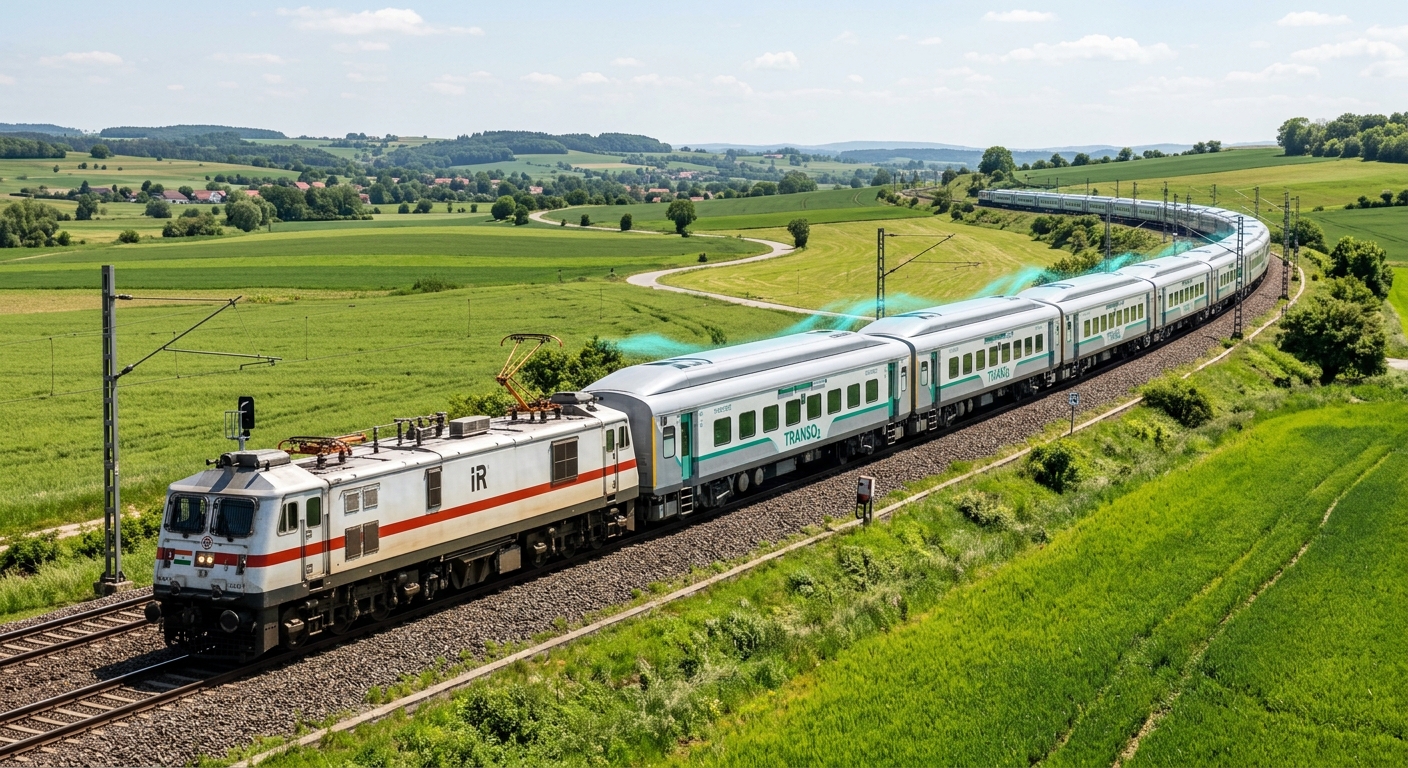
Large, standardised fleets mean a single rooftop module design can be validated once and deployed consistently, rather than re-engineered for every vehicle type.
Predictable duty cycles
Railways operate on predictable schedules and routes, simplifying performance modelling, depot servicing logistics, and the measurement, reporting and verification (MRV) needed for credible carbon claims.
This publication describes conceptual frameworks and proposed architectures. Where quantitative figures appear, they are engineering projections intended for planning and are subject to experimental validation.
What comes after railways
The same modular architecture is intended to extend to metro systems operating in dense urban corridors, high-speed rail under tighter aerodynamic constraints, freight rail via a dedicated capture wagon, and eventually high-AQI urban bus fleets.
Glossary
References
References point to established engineering disciplines and public frameworks, not fabricated citations.
- General fleet-standardisation principles in rolling-stock engineering
Suggested Citation
TransO2 Strategy Team (2025). Why Railways First: A Perspective on Sequencing Environmental Infrastructure. TRN-007, v1.0.
About TransO2
TransO2 is an Environmental Infrastructure Technology company developing integrated engineering concepts that reimagine transportation assets as intelligent environmental platforms. Through systems engineering, sustainability, digital technologies, and modular design, TransO2 explores new approaches to environmental value creation across mobility and infrastructure.