Executive Summary
This engineering note outlines the design constraints behind fitting an environmental resource platform to the roof of a modern Indian LHB coach. The rooftop offers an aerodynamic, serviceable envelope that can host capture and purification modules without displacing passenger space, while integrating with existing HVAC and structural load paths. The note covers envelope constraints, structural load assumptions and the depot-servicing interface.
The rooftop envelope
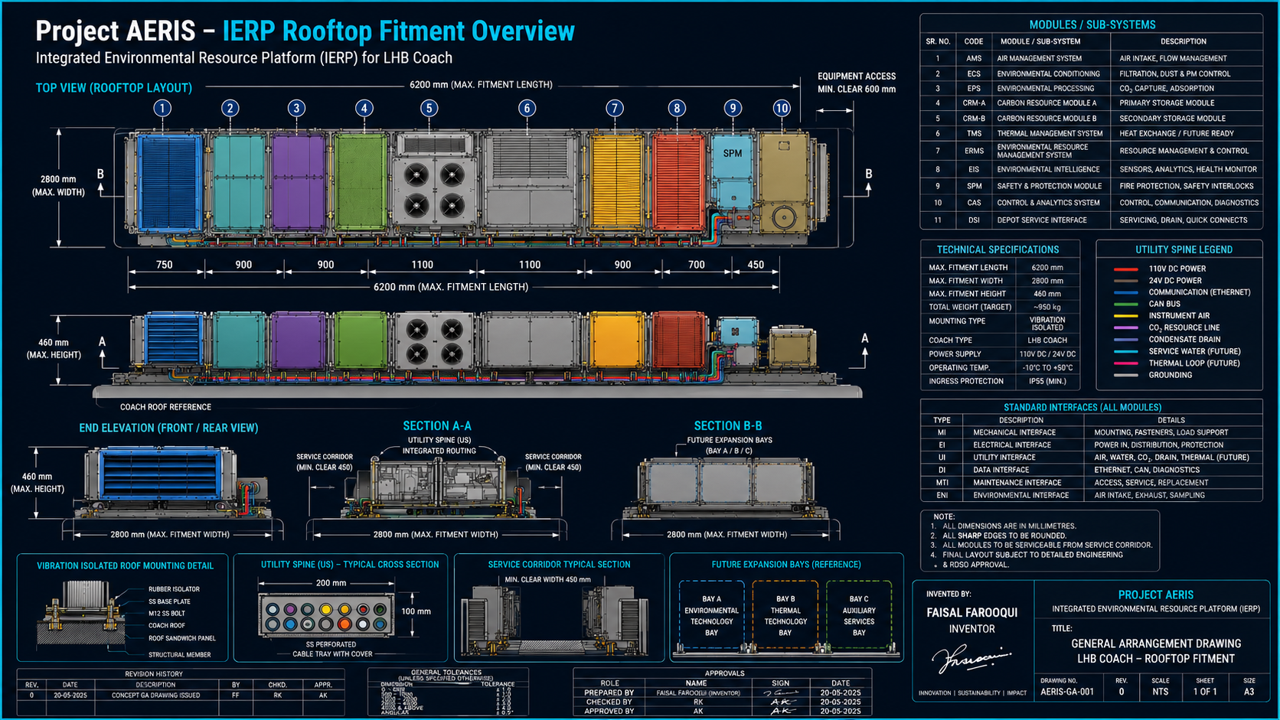
The design target keeps the fitment within a low-profile ~460 mm aerodynamic envelope, chosen to remain within RDSO structural gauge guidelines while minimising additional aerodynamic drag at operating speed.
Structural and thermal interfaces
The module is designed to share structural load paths and HVAC ducting already present on the coach roof, reducing the need for bespoke structural modification and easing retrofit onto existing rolling stock.
This publication describes conceptual frameworks and proposed architectures. Where quantitative figures appear, they are engineering projections intended for planning and are subject to experimental validation.
Depot servicing
A standardised depot interface is proposed for rapid regeneration of capture media, offload of stored CO₂ and harvested water, and routine maintenance — designed to fit within existing short depot turnaround windows.
Glossary
References
References point to established engineering disciplines and public frameworks, not fabricated citations.
- RDSO structural gauge and rolling-stock guidelines
- General aerodynamic drag principles for rail vehicles
Suggested Citation
TransO2 Engineering Team (2025). Rooftop Integration: Engineering the IERP for LHB Coaches. TRN-002, v1.0.
About TransO2
TransO2 is an Environmental Infrastructure Technology company developing integrated engineering concepts that reimagine transportation assets as intelligent environmental platforms. Through systems engineering, sustainability, digital technologies, and modular design, TransO2 explores new approaches to environmental value creation across mobility and infrastructure.